A Surprise in the Sky
The James Webb Space Telescope is the most powerful telescope humans have ever sent into space. It floats far from Earth and looks deep into the night sky to study things we have never seen clearly before.
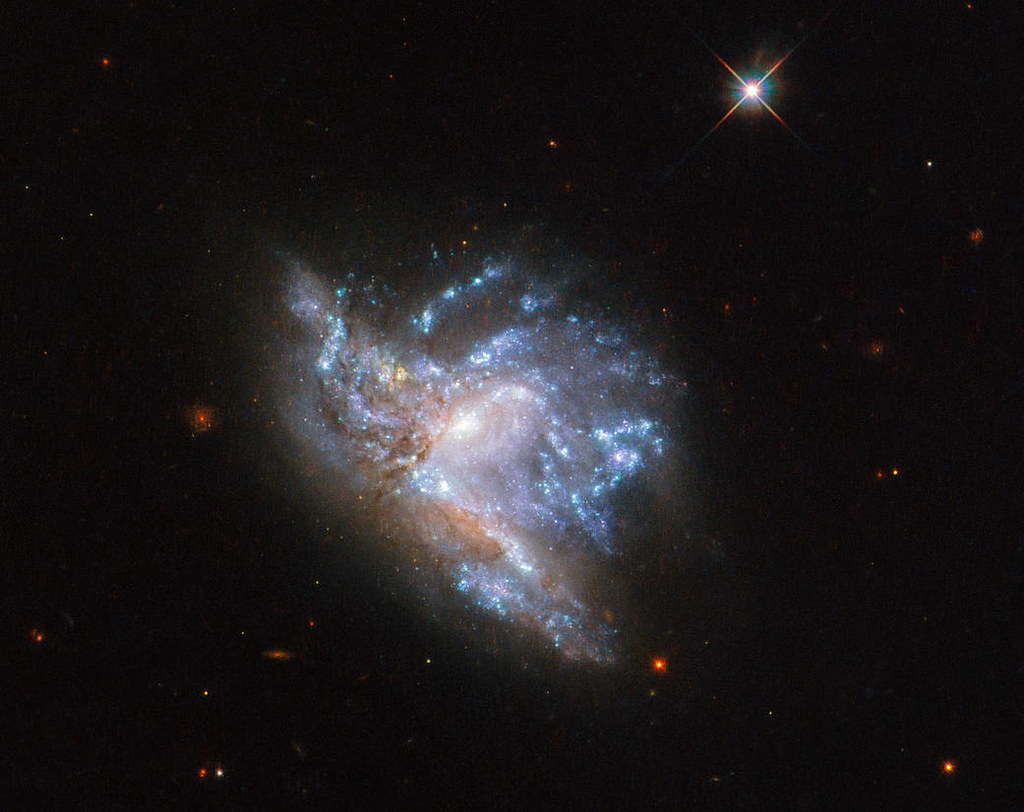
Recently, scientists used Webb to look at a part of space very, very far away. There, they spotted something amazing: two galaxies crashing into each other. A galaxy is a giant family of stars, gas, and dust all swirling together.
Looking Back in Time
Here is the really cool part. When Webb looks far away, it is also looking back in time. That sounds like magic, but it is just how light works. Light takes a long time to travel across space.
The light from these crashing galaxies left them more than 13 billion years ago, when the universe was a baby. So Webb is showing us a picture of the past, like finding an old photo in a dusty box.
Why It's a Big Deal
Scientists thought big galaxy crashes happened later, after the universe had time to grow. Seeing two galaxies smashing together so early was a real surprise.
When galaxies crash, they do not break apart like toy cars. Instead, they slowly mix together and can form one bigger galaxy. This helps scientists understand how the huge galaxies we see today were built, piece by piece.
How Webb Sees So Far
Webb has a giant golden mirror about 6.5 metres wide. That is wider than a car is long! The mirror catches faint light from far-off galaxies.
Webb also sees a special kind of light called infrared, which our eyes cannot see. This light can travel across huge distances and reach Webb even after billions of years.
What Comes Next
Scientists will keep pointing Webb at the early universe to look for more surprises. Each new picture is like a clue in a giant puzzle about how everything began.
Every time Webb finds something unexpected, it reminds us how much there is still to learn. The universe is full of mysteries, and we are only just beginning to peek into its oldest corners.